Click or Tap Button
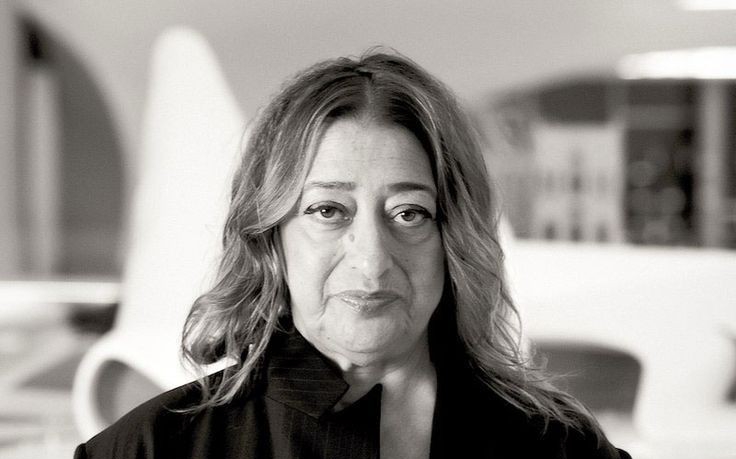
An important player in late 20th and early 21st century architecture, (31 October 1950 – 31 March 2016) was an Iraqi-British architect, artist, and designer. Hadid, who was born in Baghdad, Iraq, completed her undergraduate work in mathematics before enrolling in the Architectural Association School of Architecture in 1972. Hadid used painting as a design tool and abstraction as an evaluative tenet in order to “reinvestigate the aborted and untested experiments of Modernism to unveil new fields of building”. Hadid was also influenced by Suprematism and the Russian avant-garde.
She then began her career teaching architecture, first at the Architectural Association, then, over the years at Harvard Graduate School of Design, Cambridge University, the University of Chicago, the Hochschule für bildende Künste in Hamburg, the University of Illinois at Chicago, and Columbia University. She earned her early reputation with her lecturing and colourful and radical early designs and projects, which were widely published in architectural journals but remained largely unbuilt.
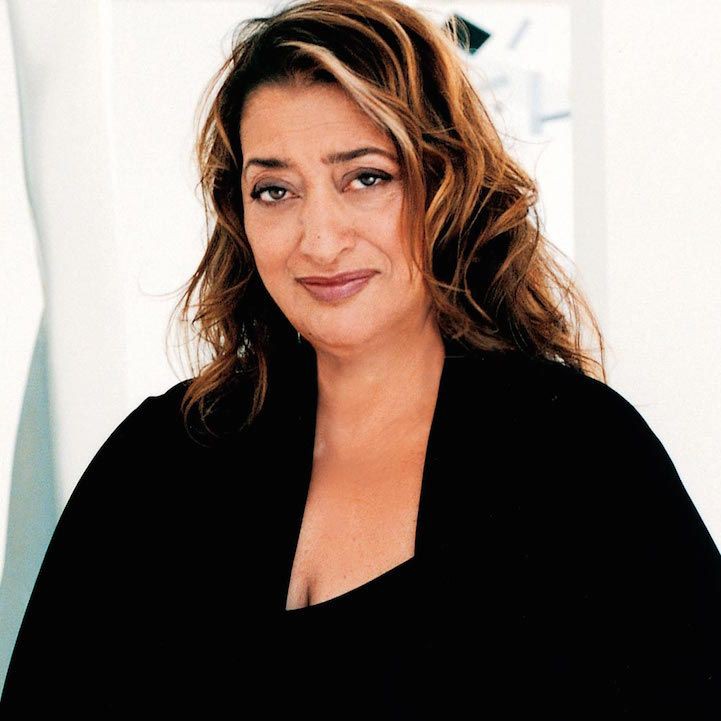
By “liberating architectural geometry, giving it a whole new expressive character,” she was dubbed the “Queen of the curve” by The Guardian. Her most notable projects include the Guangzhou Opera House, the Broad Art Museum, the MAXXI Museum in Rome, and the London Aquatics Centre for the 2012 Olympics. One of her honors, the 2017 Brit Awards statuette, was given out after her passing. At the time of her passing, some of her projects were still under development, including the Beijing Daxing International Airport and the Al Wakrah Stadium (now Al Janoub), which will host the 2022 FIFA World Cup.
Her reputation in this period rested largely upon her teaching and the imaginative and colourful paintings she made of her proposed buildings. Her international reputation was greatly enhanced in 1988 when she was chosen to show her drawings and paintings as one of seven architects chosen to participate in the exhibition “Deconstructivism in Architecture” curated by Philip Johnson and Mark Wigley at New York’s Museum of Modern Art. This, a conference at the Tate in London and press coverage of her work began to not only get her name out into the architecture world, but allowed people to associate a particular style of architecture with Hadid.

On 31 March 2016, Hadid died, at the age of 65, of a heart attack at Mount Sinai Medical Center in Miami, where she was being treated for bronchitis. The statement issued by her London-based design studio announcing her death read: “Zaha Hadid was widely regarded to be the greatest female architect in the world today”. She is buried between her father Mohammed Hadid and brother Foulath Hadid in Brookwood Cemetery in Brookwood, Surrey, England. In her will she left £67m, and bequeathed various amounts to her business partner and family members. Her international design businesses, which accounted for the bulk of her wealth, were left in trust.
 ARCHIPEDIA