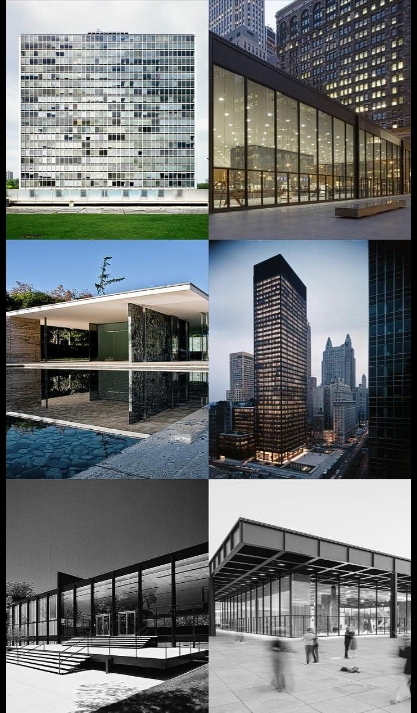
Ludwig Mies van der Rohe’s International Style was the impetus for the midcentury modernism we know today. Thus, he’s widely acknowledged as one of the 20th century’s greatest architects. With his glass-and-metal creations and his iconic Barcelona chair, Mies sought to establish a new architectural ethos that would represent modern times. His work was the cornerstone for the Museum of Modern Art’s 1932 exhibition, “The International Style” curated by Philip Johnson and Henry-Russell Hitchcock which brought the modernist movement to a wider audience and solidified his role as a leader. His legacy lives on through his influential ideology, which proves that as the architect once stated “less is more.”
ARCHITECTURAL DESIGNS
Seagram Building
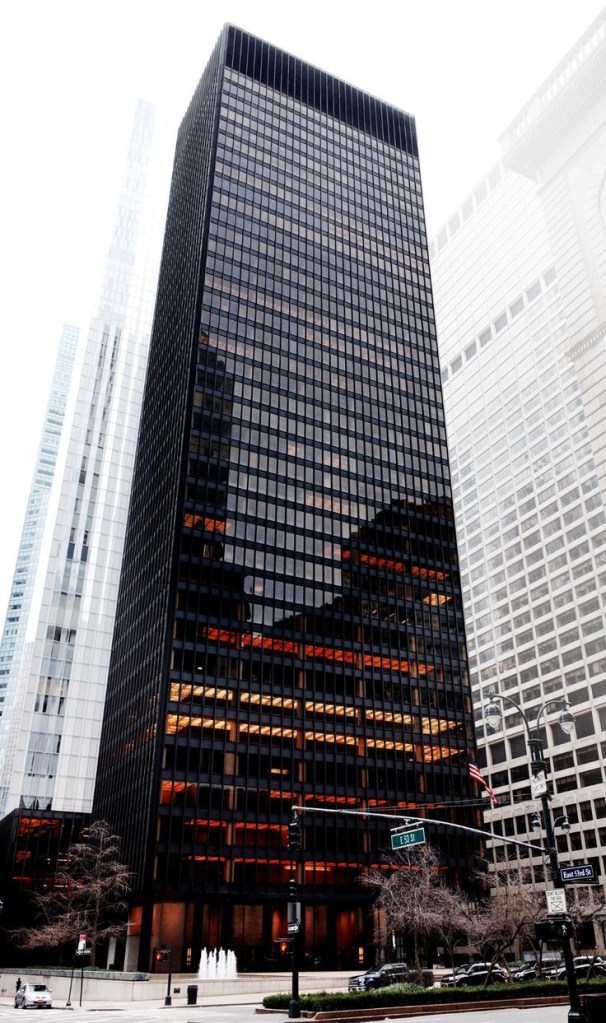
Setting the standard for the modern skyscraper, the 38-story Seagram Building is located in the heart of New York City on Park Avenue. The elegant structure was Mies’ first tall office building construction and embodies the principles of modernism.
Barcelona Pavilion
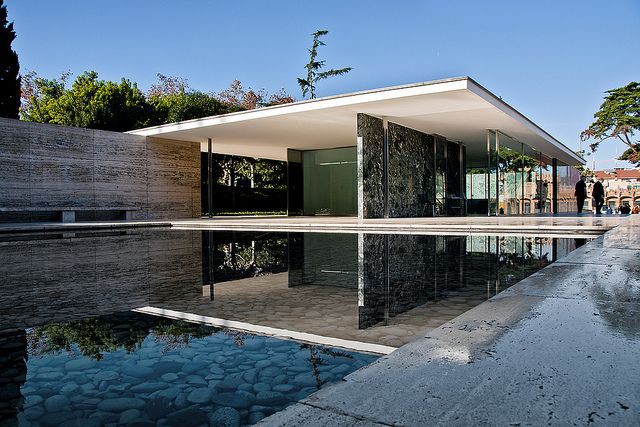
Designed by Mies van der Rohe as part of the 1929 International Exposition in Barcelona, Spain, The Barcelona Pavilion showcased his iconic Barcelona chair for Knoll and introduced architecture’s new modern movement to the world.
Chicago Federal Complex
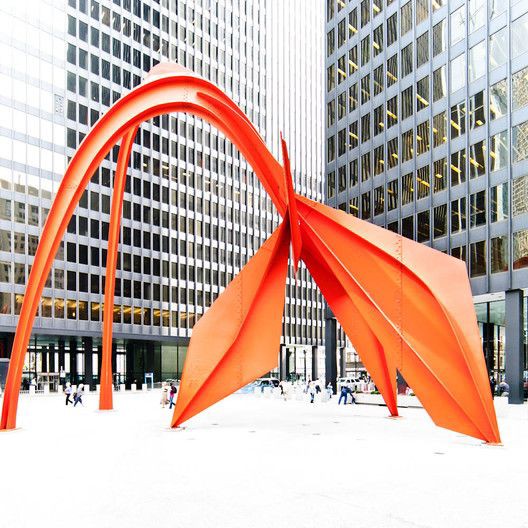
The Chicago Federal Center is another example of the incredible architectural legacy that Mies van der Rohe left the city of Chicago. In his book Chicago: In and Around the Loop, Walking Tours of Architecture and History, Gerard Wolfe refers to the Federal Center as “the ultimate expression of the second Chicago school of architecture.” Alexander Calder’s striking ‘Flamingo’ sculpture complements the linear complex.
Crown Hall
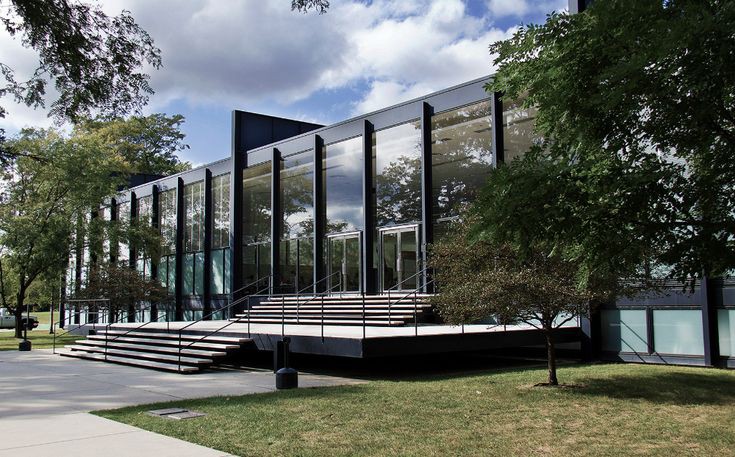
Completed in 1956, Crown Hall is the home of the College of Architecture at the Illinois Institute of Technology in Chicago, Illinois. Widely regarded as one of Mies van der Rohe’s masterpieces, Crown Hall beautifully illustrates his basic steel-and-glass construction technique. Mies considered the building to be the embodiment of his famous statement, “less is more.”
Lafayette Park
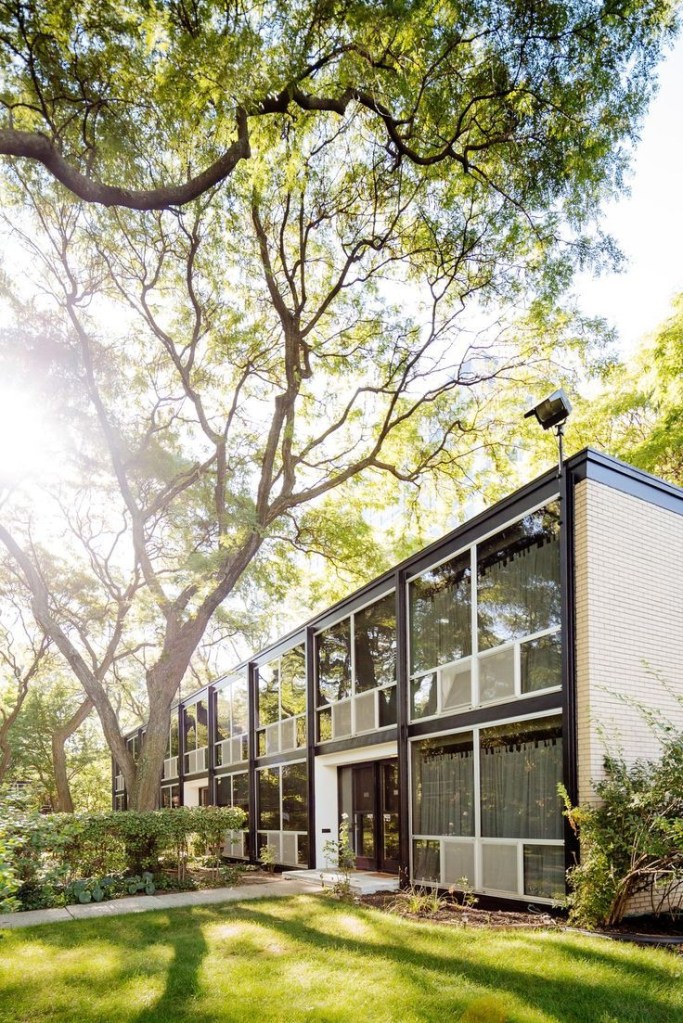
Detroit’s Lafayette Park the first urban-renewal project in the United States constitutes the world’s largest collection of buildings designed by Mies van der Rohe. Completed in 1959, the 78-acre complex is not as well known as some of Mies’ other projects. However, it deserves recognition as it still remains a vibrant neighborhood, even being more than 50 years old.
 ARCHIPEDIA