
Click or Tap Button
Pei, who was born in Canton, China, in 1917, immigrated to the United States in 1935 to pursue his studies at the Massachusetts Institute of Technology (B.Arch. 1940) and the Harvard Graduate School of Design. He first attended the University of Pennsylvania before moving on to Massachusetts Institute of Technology (M. Arch. 1946).
Pei soon pursued his education at the Graduate School of Design at Harvard University. During World War II, Pei took a break from his studies to work for the National Defense Research Committee. There, he had the chance to study with German architect Walter Gropius, the father of the Bauhaus design movement, a crucible for modern architecture where decorative elements were shunned under the motto of “form follows function.” He went back to Harvard in 1944, and two years later he received his master’s in architecture. Pei was employed at the institution at this time as an assistant professor as well.
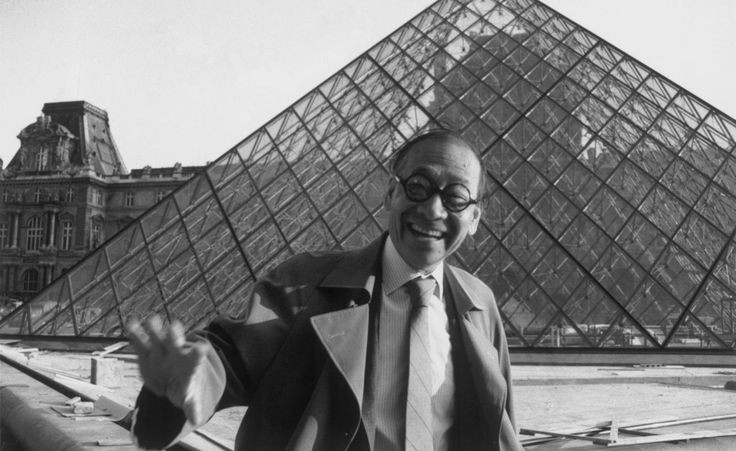
A well-known architect as its director of architecture, Pei joined the New York-based Webb & Knapp, Inc. in 1948. He departed in 1955 to create his own company, I. Incorporated by M. Pei (now known as Pei Cobb Freed & Partners). Denver, Colorado’s Mile High Center was one of his first significant undertakings. Pei also developed a number of urban redevelopment ideas for Philadelphia, Boston, and Washington, D.C., around this time.
He received the Pritzker Architecture Prize in 1983 in recognition of his services to the industry. Pei used his prize money to establish a scholarship for Chinese students to study architecture in the US. The committee acknowledged his ability to “draw together disparate people and disciplines to create a harmonious environment” in their official announcement.
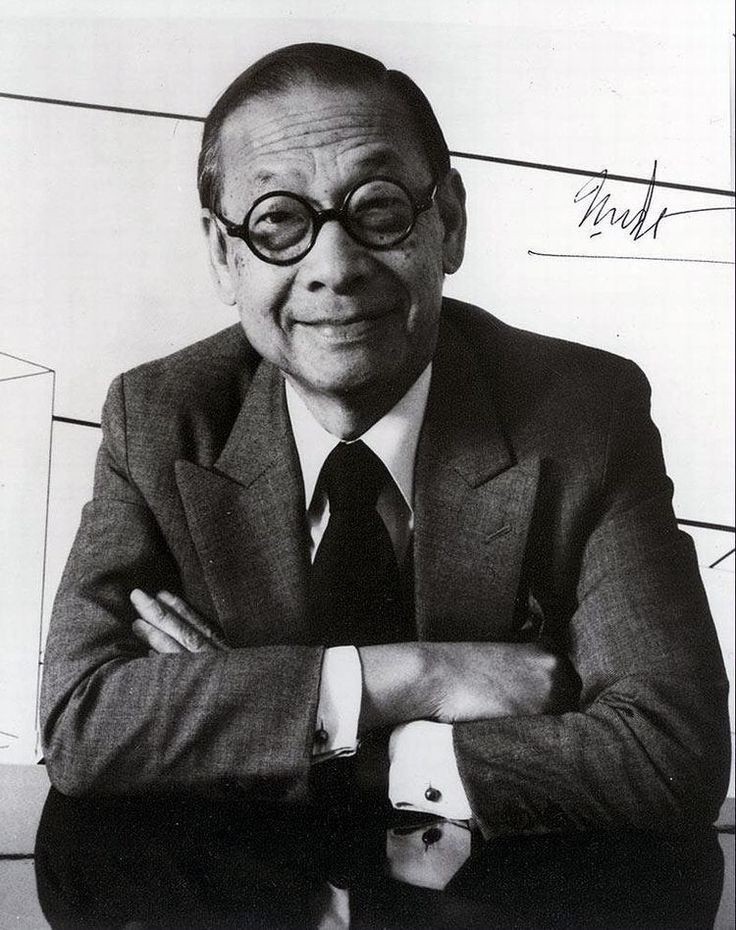
Pei worked on a variety of commercial, governmental, and cultural buildings over the course of more than 60 years while becoming one of the most sought-after architects in the world. Early in the twenty-first century, his company focused a lot of its efforts on international projects, fusing Pei’s angular geometry with local architectural customs. The Museum of Islamic Art, which debuted in 2009 and is composed of an ethereal jumble of angular cubes punctuated by conventional Islamic arches, is one such structure. Pei passed away on May 16, 2019, at the age of 102.
 ARCHIPEDIA