
Since humans stopped dwelling in caves during the Neolithic period, or around 10,000 B.C., building may be traced back to that time period. Humans created constructions that continue to baffle people today before written history began, such as Stonehenge.

The history of architecture charts the evolution of architecture using a variety of customs, geographical locations, overarching stylistic fads, and historical periods. All of these traditions are supposed to have started when people met their most basic needs for safety and shelter. In essence, the term “architecture” encompasses a wide range of disciplines that we now regard as specialized forms of practice, including urbanism, civil engineering, naval, military, and landscape architecture.
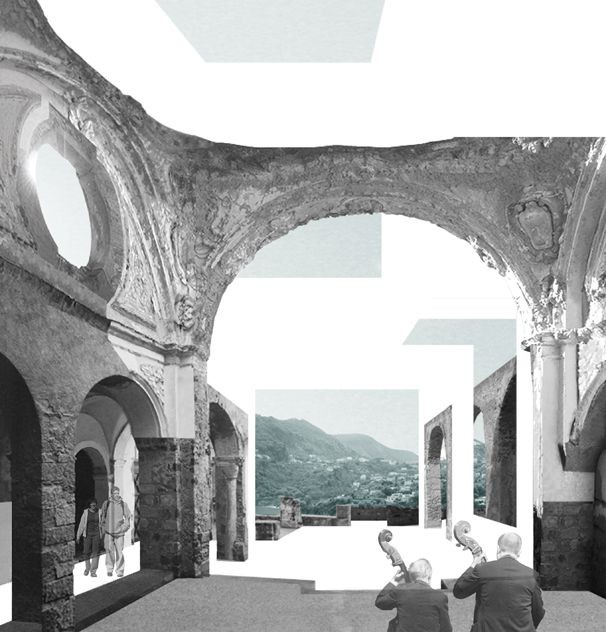
Origins of architecture. It is often assumed that architecture as a profession dates back to the ancient Greeks, the Egyptians or the Romans, and although the origins of the word date back to these times, it wasn’t until much later that the Architect became a recognised profession in its own right.
Architecture has a profound impact on our society and culture, and its history serves as a link between earlier times and the present. Since the dawn of civilization, every society has developed its own distinct style based on its social requirements, ideologies, and religious convictions. Building through the ages is the subject of architectural history.
TYPES OF HISTORICAL ARCHITECTURE STYLES
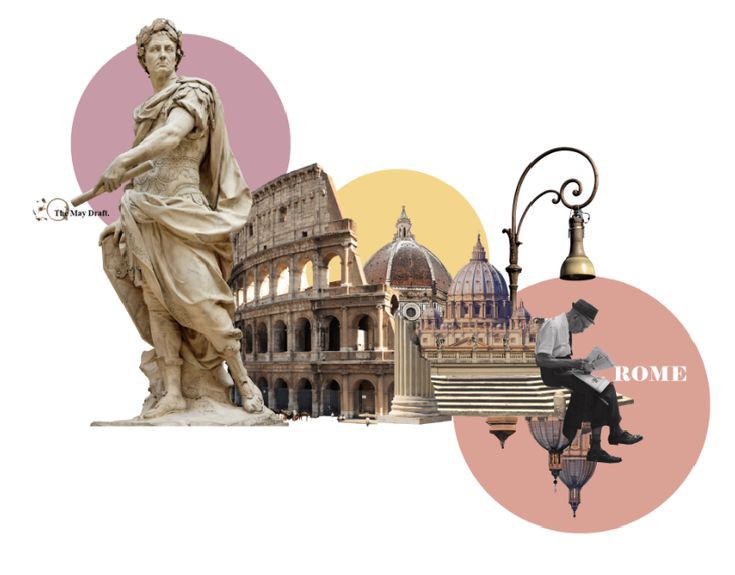
Classical Architecture
Ancient Greek and Roman architectural designs, which have impacted building throughout history, are referred to as classical architecture. Architecture known as “classical,” or architecture from antiquity, particularly from the 5th century BCE in Greece to the 3rd century CE in Rome, which placed emphasis on the column and pediment. The post-and-beam system was the main foundation of Greek architecture, with columns supporting the weight. Marble and stone construction took the place of timber construction. All of a temple’s proportions were based on the column, a human-scale unit. The Greek mainland and western colonies continued to favor the Doric order, which was likely the first. Eastern Greece is where the Ionic order originated; on the mainland, it was mostly utilized for interiors and smaller temples. The Athens Acropolis, the pinnacle of Greek architecture, features both the Doric and Ionic orders.
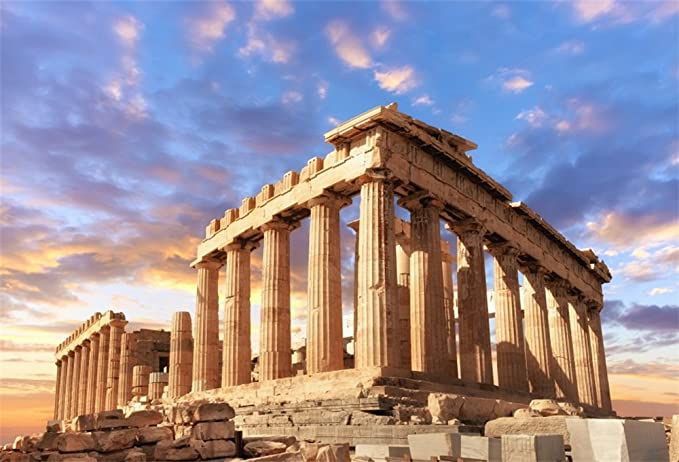
Parthenon
The Parthenon was constructed between 447-432 BCE, to be the focus of the Acropolis building complex. The Parthenon is a temple of the Doric order with eight columns at the façade, and seventeen columns at the flanks. Parthenon’s position on the Acropolis dominates the city skyline of Athens. The temple’s main function was to shelter the monumental statue of Athena. All temples in Greece were designed to be seen only from the outside. The viewers did not enter the temple and could only glance at the interior statues through the open doors.
Romanesque Architecture
Combining features of ancient Roman and Byzantine buildings and other local traditions, Romanesque architecture is known by its massive quality, thick walls, round arches, sturdy pillars, barrel vaults, large towers and decorative arcading. Romanesque architecture is an architectural style of medieval Europe characterized by semi-circular arches. There is no consensus for the beginning date of the Romanesque style, with proposals ranging from the 6th to the 11th century, this later date being the most commonly held.
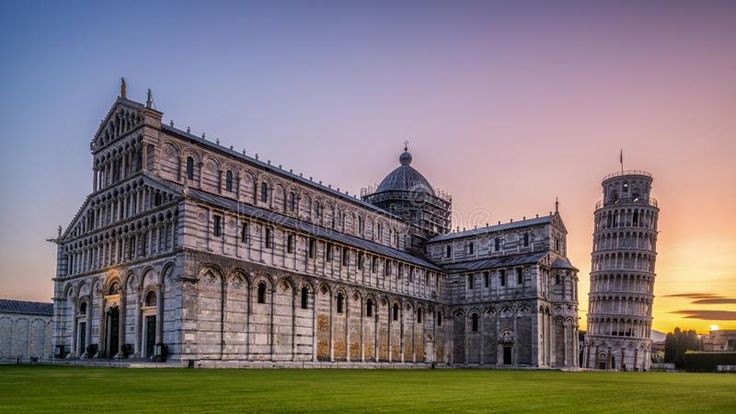
Pisa Cathedral
A medieval Roman Catholic cathedral, building style known as Pisan Romanesque, is situated in the Piazza Dei Miracoli, a Cathedral Square in Pisa, Tuscany, Italy. It was erected outside Pisa’s medieval walls, has various stylish elements such as classical, Byzantine, Islamic, and Lombard-Emilian. The original plan was a Greek cross but today’s plan has a Latin cross with a nave on center with two aisles on each side with apse and transepts having three naives.
The exterior decoration is lavish with mosaic, multicolored marble, high arches with Islamic and southern Italian influence, blind arches with lozenge shapes, and numerous bronze objects.
The interior is covered with white and black marble with monolithic grey marble columns having Corinthian capitals and a wooden 17th-century coffered ceiling painted and decorated with gold leaf.
Ancient Greek Architecture
The Greek-speaking people who developed a thriving culture on the Greek mainland, the Peloponnese, the Aegean Islands, and in colonies in Anatolia and Italy from roughly 900 BC to the first century AD are the source of ancient Greek architecture, with the earliest surviving architectural works dating from around 600 BC.

Periclean Parthenon of Athens
Perhaps the fullest, and most famous, expression of Classical Greek temple architecture is the Periclean Parthenon of Athens—a Doric order structure, the Parthenon represents the maturity of the Greek classical form.
Ancient Roman Architecture
Roman architecture adopted the external language of classical Greek architecture for the purposes of the ancient Romans, but was different from Greek buildings, becoming a new architectural style. The two styles are often considered one body of classical architecture. Roman architecture flourished in the Roman Republic and even more so under the Empire, when the great majority of surviving buildings were constructed, some of which the ruins remain, to which we’ve researched and learned. Ancient Roman architecture used new materials, particularly concrete, and newer technologies such as the arch and the dome to make buildings that were typically strong and well-engineered. Large numbers remain in some form across the empire, sometimes complete and still in use to this day.
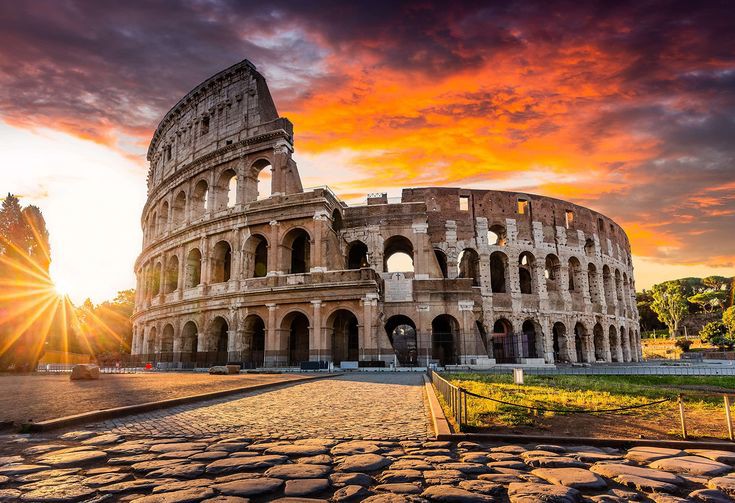
Roman Colosseum
When the famous amphitheater, the Colosseum, was built in ancient Rome, it had an area of 620 by 523 feet (189 by 159 meters)), making it the largest amphitheater of its time. The construction of the Colosseum, the largest and most popular ancient Roman monument, began during the reign of Emperor Vespasian in 72 AD. By the time it was finished by his son Titus in 80 AD, a never-before-seen amphitheater with a seating capacity of over 50,000 was ready for use. It could accommodate such large numbers of spectators that as many 80 different entrances were installed. It is said that its opening ceremony – the grandest of all spectacles – lasted for about 100 days. In that time, about 5,000 animals and 2,000 gladiators fought to their deaths in an unprecedented extravaganza of gladiatorial and bestiarius battles.
Renaissance Architecture
An intentional rebirth and development of some aspects of ancient Greek and Roman philosophy and material culture may be seen in the European architecture of the early 15th and early 16th century in various places. Gothic architecture was succeeded stylistically by Renaissance architecture, which was then followed by Baroque architecture. The Renaissance style was originally introduced in Florence, where Filippo Brunelleschi was one of its pioneers, and it swiftly spread to other Italian cities. Spain, France, Germany, England, Russia, and other parts of Europe received the fashion at various times and to diverse degrees of success.

Duomo Santa Maria del Fiore
Structurally, Florence Cathedral belongs to the Gothic style. Its dome, however, was a forerunner of Renaissance architecture.
The idea and plan for the entire building had been conceived in 1293, before the Renaissance period, however the technology to complete the dome did not yet exist. It was not until Fillipo Brunelleschi that the Cathedral was finally given a dome, more than a century later. Brunelleschi came up with a daring approach to vault the dome space without any scaffolding by using a double shell with a space in between. With over 4 million bricks, a diameter 45.52m and height of 90m, it was the largest dome in the world until 1881.
Baroque Architecture
Early in the 17th century, in Italy, a highly dramatic and ornamental architectural style known as baroque first emerged. It was first used in churches and palaces in Italy, Spain, Portugal, France, Bavaria, and Austria during the High Baroque (1625–1775), when it was most popular. It was first introduced by the Catholic Church, particularly by the Jesuits, as a strategy to combat the Reformation and the Protestant church. It extended as far as Russia and the Spanish and Portuguese colonies in Latin America during the Late Baroque era (1675–1750). Rococo, a version with considerably more extravagant ornamentation, debuted around 1730 and grew popular in Central Europe.

Palace of Versailles – Versailles, Île-de-France
The Palace of Versailles was completed during the Reign of Louis XIV. It was the first in a series of Grand Baroque Palaces that would be constructed in Europe during the Baroque Age. The Palace of Versailles is arguably the most impressive Royal Palace on earth. It was built by one of Europe’s most powerful monarchs, King Louis XIV, who ruled France for over 70 years from 1643-1715. Versailles began as a small hunting lodge that Louis was fond of, and he financed a massive expansion project that created the current building. Louis the XIV would eventually move his court to the Palace of Versailles, essentially making it the political heart of France instead of Paris, which was located about 12 miles (19 km) away. Due to its importance, the palace was inscribed as a UNESCO World Heritage Site in 1979.
Gothic Architecture
The gothic style of architecture originated in Europe’s Middle Ages. It is characterized by vertical proportions, pointed arches, external buttressing, and asymmetry. At great gothic cathedrals like Chartres in France and Salisbury in England, pointed arches allowed for heavy stone ceiling vaults despite the fact that the walls were pierced for huge stained-glass windows. These daring structures were made possible by external buttressing that bore the weight of the vaults. Not only were the arched windows tall in proportion, but gothic cathedrals often included lofty pointed steeples. Gothic architects did not strive for symmetry, as is famously seen in the west façade of Chartes Cathedral, where the two steeples do not match. The European Middle Ages are when the gothic architectural style first appeared. Asymmetry, pointed arches, exterior buttressing, and vertical proportions are some of its distinguishing features. The walls of famous gothic cathedrals like Salisbury in England and Chartres in France were pierced for enormous stained-glass windows, yet pointed arches allowed for hefty stone roof vaults. The external buttressing that supported the weight of the vaults allowed for these daring structures. In addition to having tall proportioned arched windows, gothic cathedrals frequently had soaring pointed steeples. As is famously seen on the west façade of Chartes Cathedral, where the two steeples do not match, Gothic architects did not aim for symmetry.
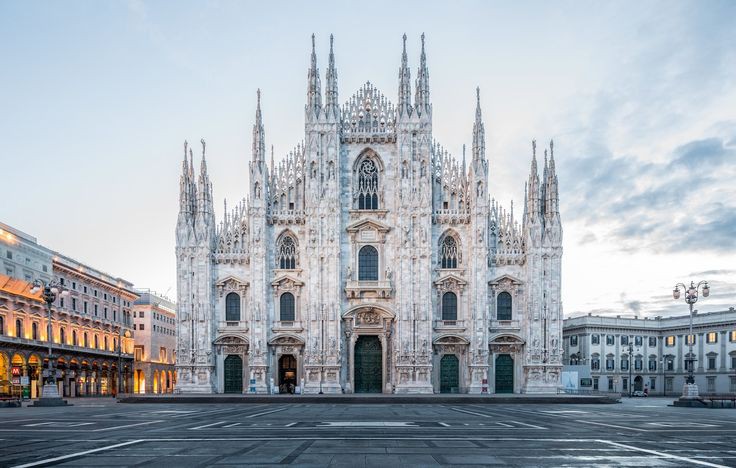
Cathedral Church of Milan
Milan Cathedral was another example of Gothic Architecture that took almost 600 years to complete. The ground was broken in 1386 and the bulk of the construction wasn’t completed until well into the 19th Century in 1865. Building work was further stalled during WW2, thanks to allied bombing of Milan.
The building in its current form was finally completed in 1965. Construction was initially very rapid with half the cathedral actually completed by 1402. After this point, a lack of funds meant construction stalled.
It is the third largest cathedral in the world and is famous for its forest of spires and pinnacles. Not to mention its highly ornate facade. The complex forest of spires and pinnacles provides both aesthetic and structural purposes.
Neoclassical Architecture
In the late 18th and early 19th centuries, Neoclassical architecture was a revival of Classical architecture. Unlike Classical revivalism (see Greek Revival), which tended to reuse Classical pieces, the movement was concerned with the logic of entire Classical books. The great size, geometric simplicity, Greek, particularly Doric (see order) or Roman detail, dramatic use of columns, and predilection for bare walls all define neoclassical architecture. The new trend toward vintage simplicity was a response to the excesses of the Rococo style.

Washington, DC: The United States Capitol Building
After a heated design competition, construction on the Capitol building began in 1793. And while it has been burned, rebuilt, and expanded since its original incarnation, the building’s neoclassical style—inspired by buildings in ancient Greece and Rome and intended to evoke ideals that guided the nations founders as they framed their new republic—has remained consistent.
The building’s iconic dome, designed by Thomas U. Walter and constructed from 1856 to 1866, is made of cast iron and features columns, pilasters, brackets, windows, and a crowning statue. It replaced a smaller wooden dome that had been the design of architect Charles Bulfinch.
 ARCHIPEDIA