Click or Tap Button
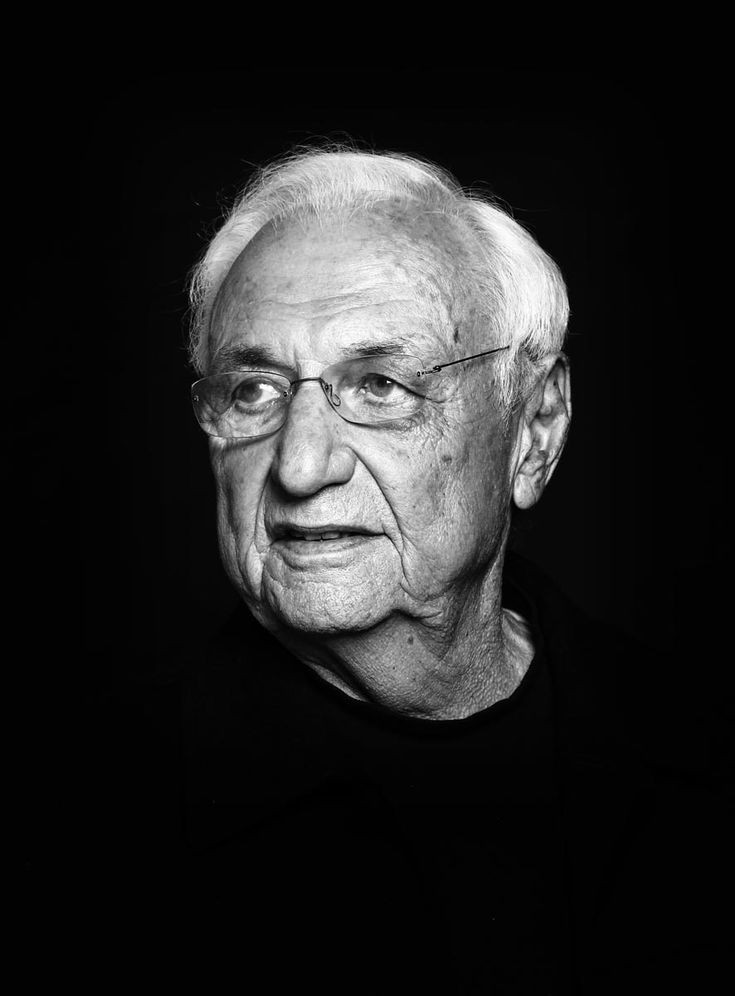
Frank Gehry, whose full name is Frank Owen Gehry and birth name is Ephraim Owen Goldberg, is a renowned Canadian-American architect and designer who was born on February 28, 1929, in Toronto, Ontario. He is also known by the nickname Frank O. Gehry.
Gehry moved to Los Angeles with his family in 1947, and he quickly started attending night school at Los Angeles City College. Later, he pursued studies in city planning at Harvard University and architecture at the University of Southern California (1949–51 and 1954). (1956–57). After working for a number of architectural firms, including those of André Remondet in Paris and Victor Gruen in Los Angeles, he founded his own business, Frank O. Gehry & Associates, in 1962. In 2002, Gehry Partners, its successor, was founded.
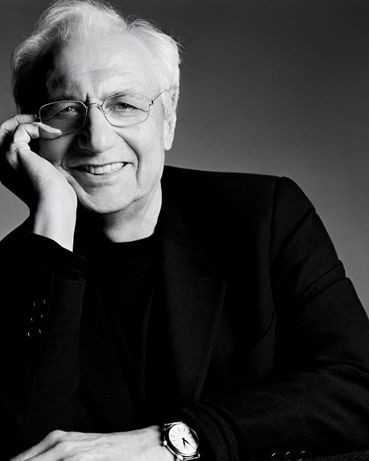
Reacting, like many of his contemporaries, against the cold and often formulaic Modernist buildings that dotted many cityscapes, Gehry began to experiment with unusual expressive devices and to search for a personal vocabulary. In his early work he built unique, quirky structures that emphasized human scale and contextual integrity. These experiments are perhaps best embodied by the “renovations” he made to his own home (1978 and 1994) in Santa Monica, California. Gehry essentially stripped the two-story home down to its frame and then built a chain-link and corrugated-steel frame around it, complete with asymmetrical protrusions of steel rod and glass. He made the traditional bungalow—and the architectural norms it embodies—appear to have exploded wide open. Gehry continued those design experiments in two popular lines of corrugated cardboard furniture, Easy Edges (1969–73) and Experimental Edges (1979–82). His ability to undermine the viewer’s expectations of traditional materials and forms led him to be grouped with the deconstructivist movement in architecture, although his play upon architectural tradition also caused him to be linked to postmodernism.
Like many of his predecessors, Gehry started experimenting with novel expressive techniques and looking for a unique vocabulary as a response to the frigid and frequently formulaic Modernist buildings that studded many cityscapes. He created unusual, oddball buildings in his early work that prioritized human scale and contextual integrity. The “renovations” he carried out on his own Santa Monica, California, home between 1978 and 1994 may serve as the best representation of his attempts. Gehry built a chain-link and corrugated-steel frame around the two-story house, complete with asymmetrical protrusions of steel rod and glass. This process essentially reduced the house to its bare bones. He created the illusion that the conventional cottage and the architectural standards it represented had erupted.
Gehry was honored with commissions all around the world in the 1980s and 1990s because of his approach to each new project, which he described as “a sculptural object, a spatial container, a space with light and air.” These pieces shared his Santa Monica home’s deconstructed aesthetic, but they also started to show a clean grandeur that fit his more outward-looking initiatives. The Vitra Furniture Museum and Factory (1987) in Weil am Rhein, Germany; the American Center (1994) in Paris; and the Frederick R. Weisman Art Museum (1993) at the University of Minnesota in Minneapolis are notable examples of the architecture from the time.
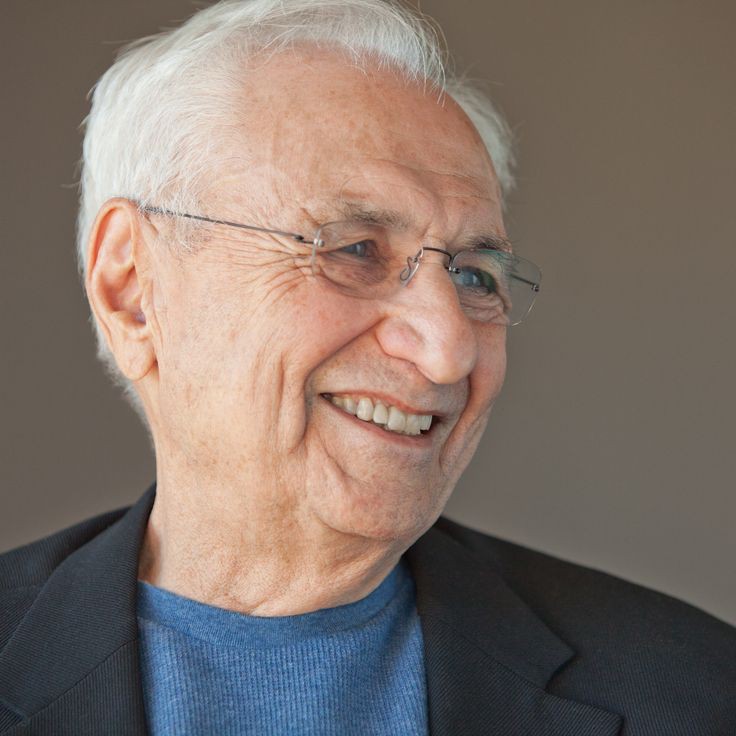
Gehry was in high demand in the 21st century. He designed a number of cultural institutions, including a performing arts centre (2003) for Bard College in Annandale-on-Hudson, New York; the Jay Pritzker Pavilion (2004) in Chicago’s Millennium Park; and the New World Center (2011) for the New World Symphony orchestral academy in Miami Beach, Florida. For his 2008 renovation of the Art Museum of Ontario in Toronto, Gehry retained the original building (1918) but removed an artistically unsuccessful entryway that had been added in the 1990s. Although the updated museum shows many characteristic Gehry touches, one critic called it “one of Mr. Gehry’s most gentle and self-possessed designs.”
 ARCHIPEDIA