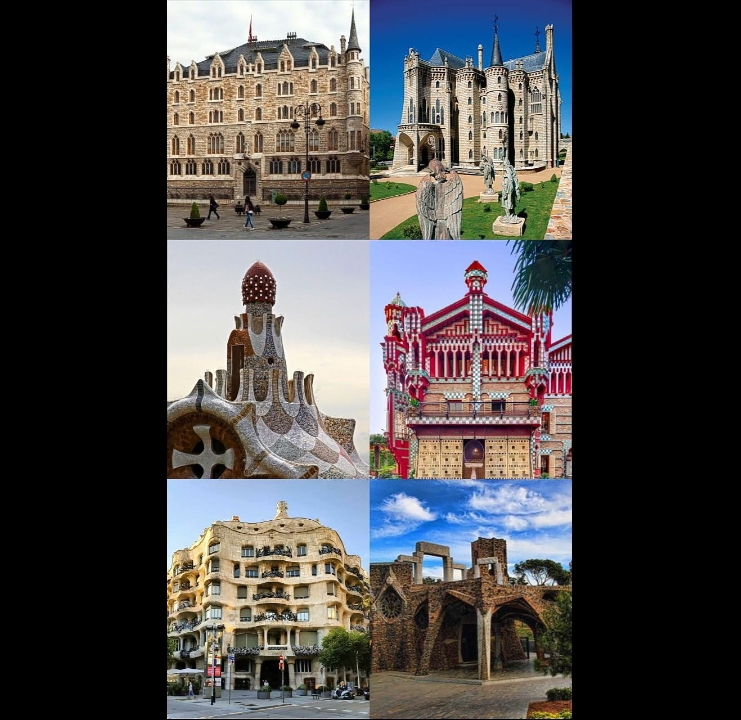
In the 19th and 20th centuries, Antoni Gaud is most known for leading the Modernisme movement. The Catalan architect is responsible for some of Barcelona’s most recognizable buildings, including the Sagrada Familia and Casa Milà, which were influenced by the time’s fashionable neo-Gothic and organic styles. His designs were influenced by his love of nature and his faith, as evidenced by the inclusion of highly symbolic statuary and structural elements. Many of Gaud’s creations are now UNESCO World Heritage Sites, and architects all over the world continue to admire and research his work. These are seven of his most stunning architectural achievements, ranging from opulent basilicas to exclusive mansions. Continue reading for a closer examination of some of the most well-known works of Catalan modernism.
ARCHITECTURAL DESIGNS
Sagrada Familia
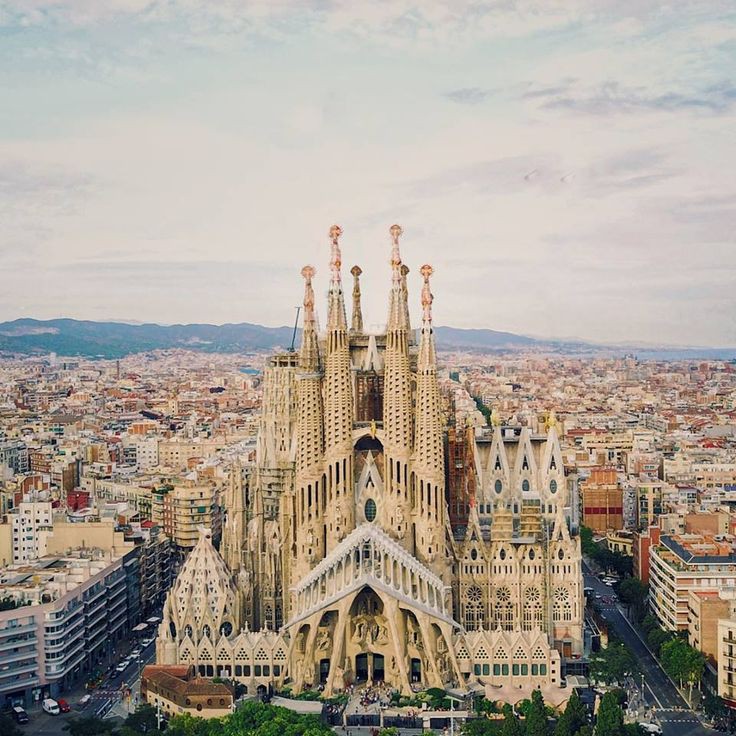
Gaudí never finished the Sagrada Familia, even though he devoted his final years to creating magnificent catholic church in Barcelona. Neo-Gothic architect Francisco de Paul del Villar y Lozano started work on the project in 1882. After assuming control in 1883, Gaud gave the building a distinctive Gothic and Art Nouveau makeover. Supporting columns in the inside were modeled after a forest of entwined trees, resulting in an elegant elevated ceiling with abstract shapes.
Park Güell

Park Güell, located on Carmel Hill in Barcelona, combines experimental architectural and landscape design. The area was constructed between 1900 and 1914, but didn’t become a public park until 1926. Park Güell gave Gaudí the opportunity to create an organic view of baroque construction as a significant aspect of his naturalist phase. He was inspired by buildings like the Temple of Apollo at Delphi, which contains a lot of mythological and religious imagery.
Casa de los Botines
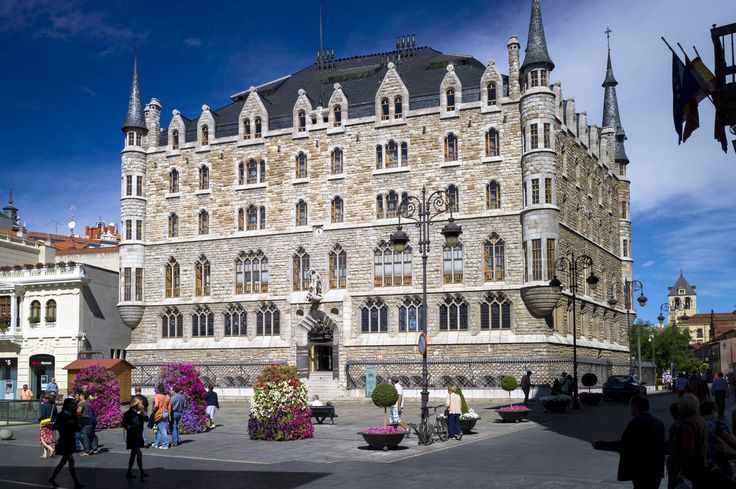
Casa de los Botines was Gaudí’s homage to the striking architecture of the neighboring city of León. With a moat and two towers on either side of the building’s façade, he combined neo-Gothic and medieval features in the design. It is now the main office for a nearby savings bank despite being built with the intention of being a residential structure with a warehouse.
Casa Milà
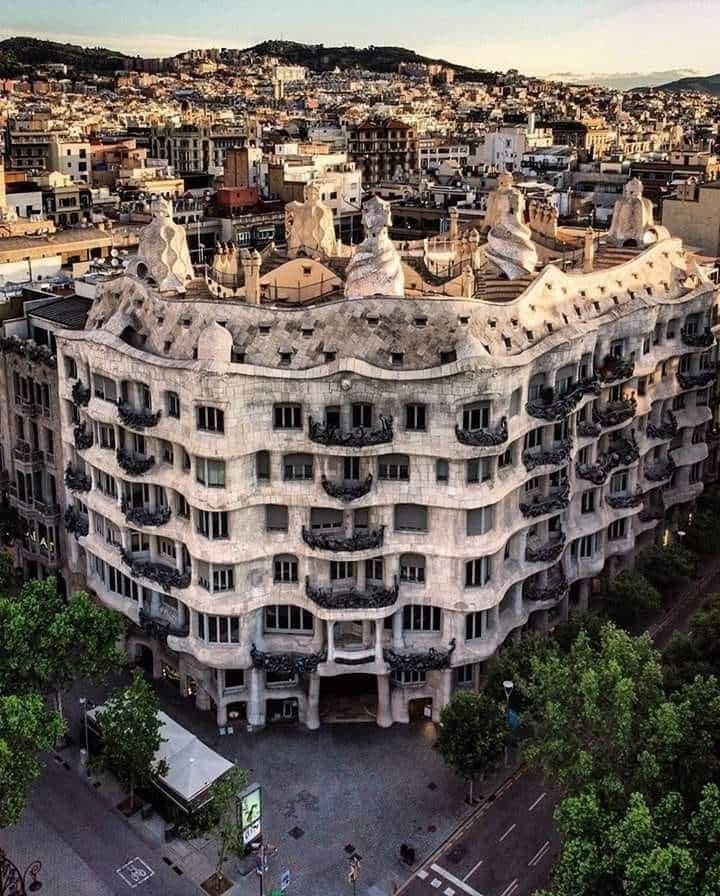
This modernist apartment complex, often known as La Pedrera, was constructed in Barcelona between 1906 and 1912. Because of its groundbreaking structural features, including its undulating stone façade and self-supporting columns, it was controversial when it was built. It was designated a World Heritage Site in 1984 and now houses the Catalunya-La Pedrera Foundation, which organizes public tours and exhibitions at the site.
Casa Batlló
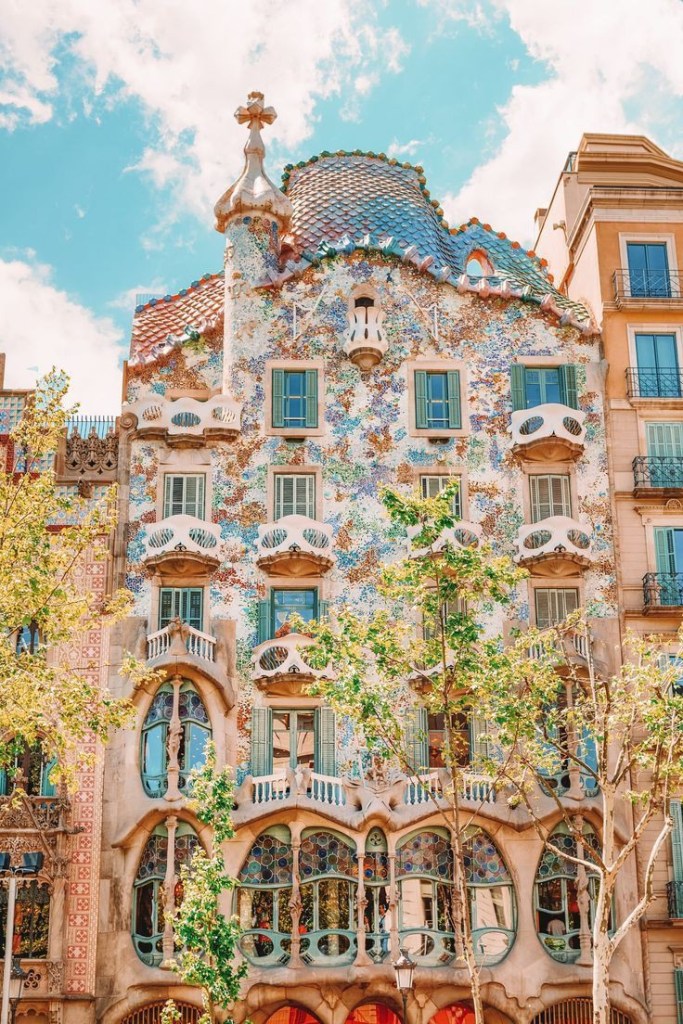
Casa Battló, a Barcelona building that was renovated in 1904, is colloquially known as Casa dels Ossos (House of Bones) due to the exterior’s skeletal appearance. Its roof is gracefully arched, sometimes compared to the back of a dragon, and is predominantly covered with multicolored shattered ceramic tiles. There are four sculptured chimney stacks on the roof as well.
Episcopal Palace of Astorga
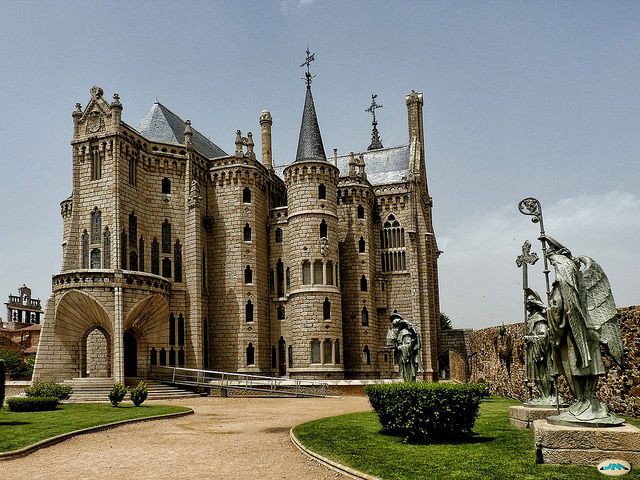
One of Gaudí’s three designs outside of Catalonia is the Episcopal Palace in Astorga, which was constructed between 1889 and 1913. In the nineteenth century, a fire decimated the original structure, and Gaudí was commissioned to design a replacement. Instead of studying the geography of the area as he typically did, he requested that images be provided to him so that he could work from them while he was working on a project in Barcelona. The neo-medieval building has four cylindrical towers and an exterior made of gray granite. The buttress and chimney arches, which are characterized by his distinctive design, are still visible.
The Church of Colonia Güell
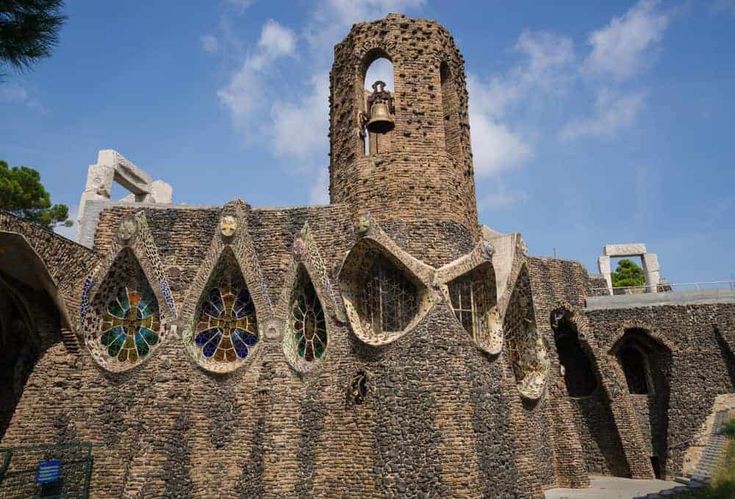
The Church of Colonia Güell was intended as a place of worship in Santa Coloma de Cervelló and is another incomplete project by Gaudí. Count Eusebi de Güell, a Spanish businessman, had the idea for the religious building. The only component of the project that is finished is the crypt since he ran out of money before they could finish it.
 ARCHIPEDIA