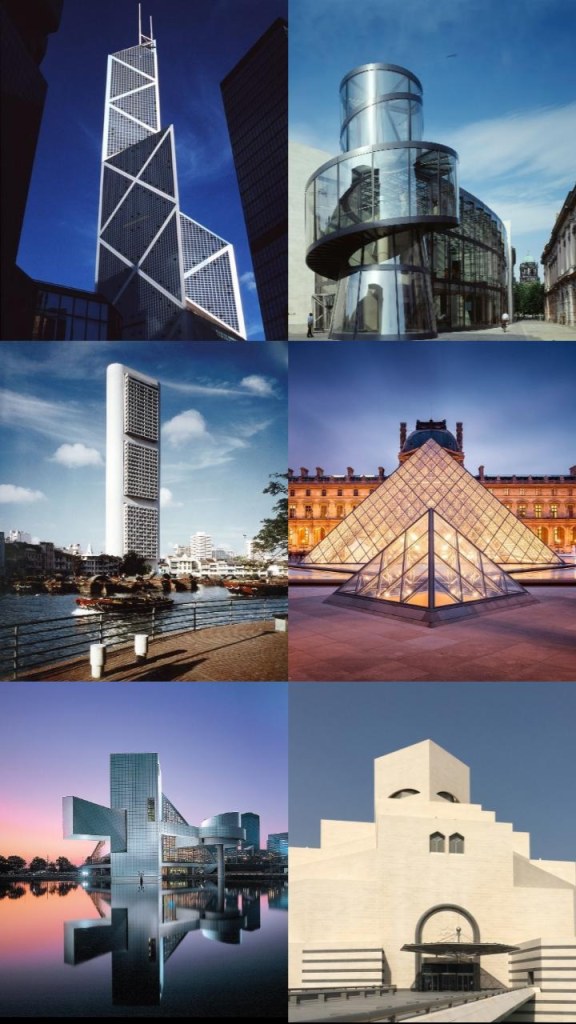
According to his biographer, Pei received “every award of any consequence in his art,” including the 1963 Arnold Brunner Award from the National Institute of Arts and Letters, the 1979 AIA Gold Medal, the 1989 first Praemium Imperiale for Architecture from the Japan Art Association, the 1998 Edward M. Doheny Award for Lifetime Achievement in the Arts from the Cooper-Hewitt, National Design Museum He received the Pritzker Prize in 1983, also known as the Nobel Prize for architecture.
ARCHITECTURAL DESIGNS
Museum of Islamic Art
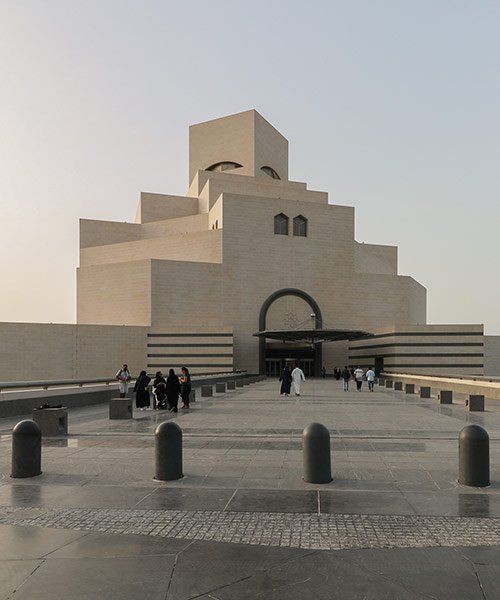
The Museum of Islamic Art (MIA) showcases 1,400 years of Islamic art from three continents. Masterworks from all over the world exemplify the diversity found in Islamic tradition, and the Museum of Islamic Art (MIA) is home to one of the world’s largest collections of Islamic art.
Bank of China Tower
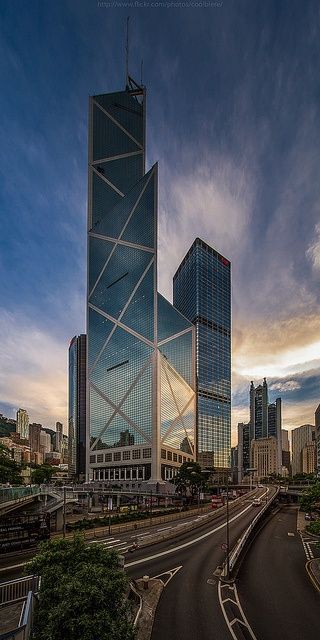
In 1989, the triangular glass skyscraper known as the Bank of China Tower was finished in Hong Kong. Along with other tenants, it is home to the Beijing-based central bank of China’s Hong Kong branch.
The skyscraper, which rises 1,205 feet (367 meters), was for a short time the highest structure outside of the United States. I.M. Pei, an American architect, designed it. According to Pei, the tower features a unique three-dimensional triangular design with a quadrilateral base and a triangular top that “transfers all vertical tension to the four corners of the building, making it exceptionally stable and wind resistant” (an important consideration in typhoon-threatened Hong Kong). The interior floors are asymmetrical, with points and angles at their ends. Windows on every side provide a variety of views.
Le Grand Louvre
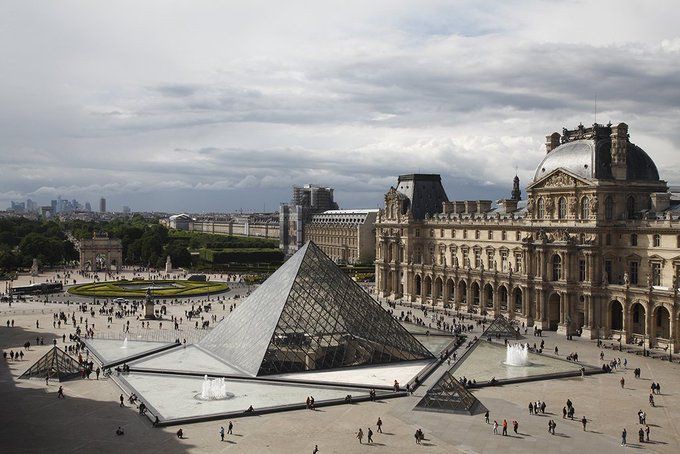
The French Finance Ministry had been housed in the Louvre’s northern wing since 1871, therefore the project to extend and modernize the museum and building, known as The Grand Louvre, lasted for ten years and was started by French President François Mitterrand in 1981. A primary focal point that complements the size and architecture of the Louvre is provided by the glass and steel pyramid installed in the centre of the court.
Suzhou Museum
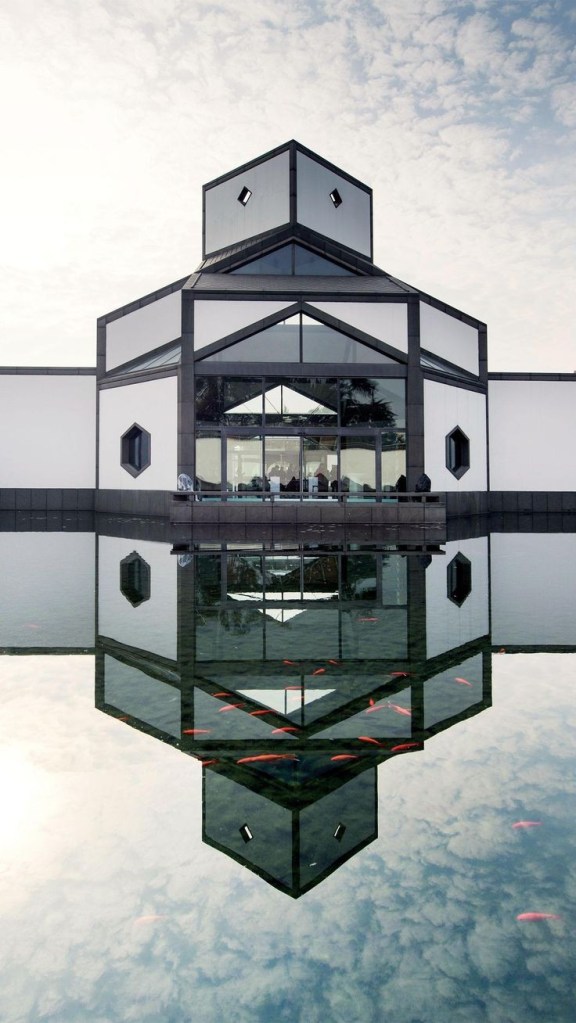
As one of the most recent structures created by renowned Pritzker Prize winner I.M. In the center of his hometown of Suzhou, China, Pei constructed the Suzhou Museum. The architect worked to integrate both his modernist ideas and the Suzhou vernacular as one of the last surviving modernists. The Garden of the Humble Administrator, a 16th-century garden classified as a UNESCO World Heritage site, and the landmarked Zhong Wang Fu, a complex of 19th-century historical dwellings, are both close to the museum, which is located on the northeastern part of Suzhou’s historic neighborhood.
Miho Museum
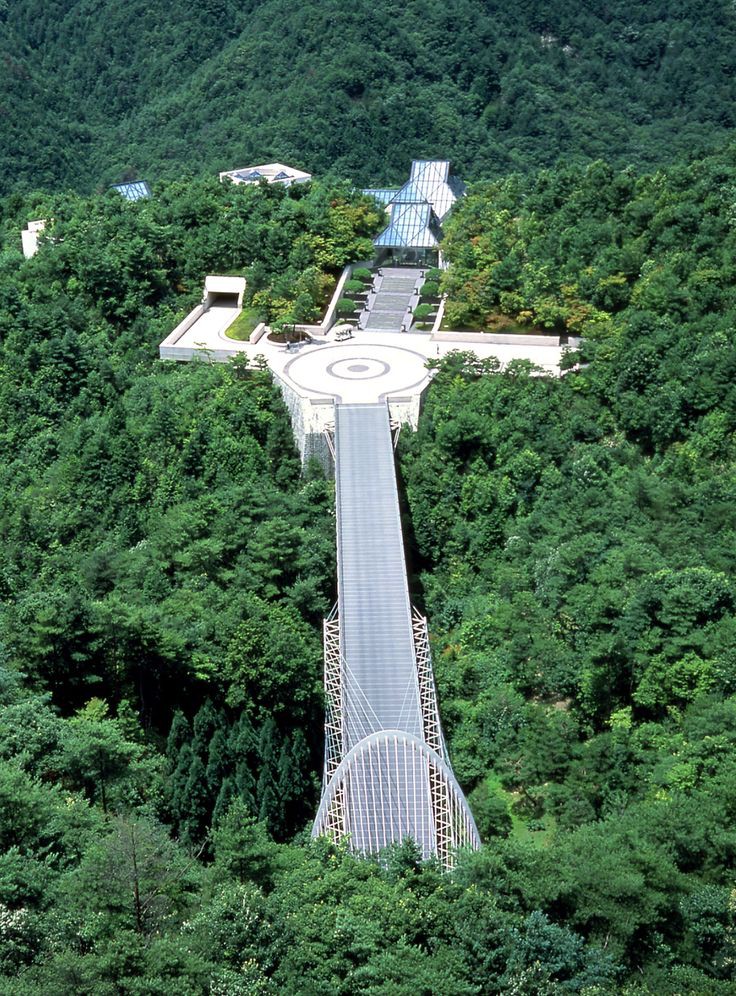
The Miho Museum was a joint Japanese and American project completed by architect I. M. Pei and Kibowkan International, Inc. in August of 1996 on a scenic mountainside in a nature preserve near the town of Shigaraki, Shiga prefecture, Japan. The museum’s details reflect the designer’s innovative endeavor to break new ground, as with the novel appearance of sloped glass walls composed of space frames, the warmth of the materials used, especially the Magny Doré limestone and colored concrete, and the systems for exhibiting and housing works of art under the optimum conditions.
 ARCHIPEDIA